
Shapeshifting Explained🧬
Our universe is fluid, interconnected, and full of potential transformations.

Shapeshifting—the ability to transform one’s form—has captivated human imagination for millennia, appearing in ancient myths, folklore, and modern media as a supernatural feat. From werewolves howling under the full moon to vampires morphing into bats, these tales evoke mystery, power, and the blurring of boundaries between human and beast. But what if shapeshifting isn’t purely magical? What if it’s rooted in the fundamental principles of quantum mechanics and physics, where all matter is interchangeable energy vibrating at different frequencies?
We’ll explore shapeshifting through a scientific lens, demystifying it as a process of matter rearrangement rather than sorcery. We’ll delve into quantum concepts like wave-particle duality and vibrational frequencies, connect them to biological examples in nature (such as octopuses and lizards), tie in folklore interpretations of vampires and werewolves, and examine how controlling matter equates to controlling perception via the observer effect. Along the way, we’ll consider nuances, implications, edge cases, and related ideas, revealing that shapeshifting is less about spells and more about the elegant dance of energy in our universe.
Quantum Foundations: Matter as Interchangeable Energy and Vibrations
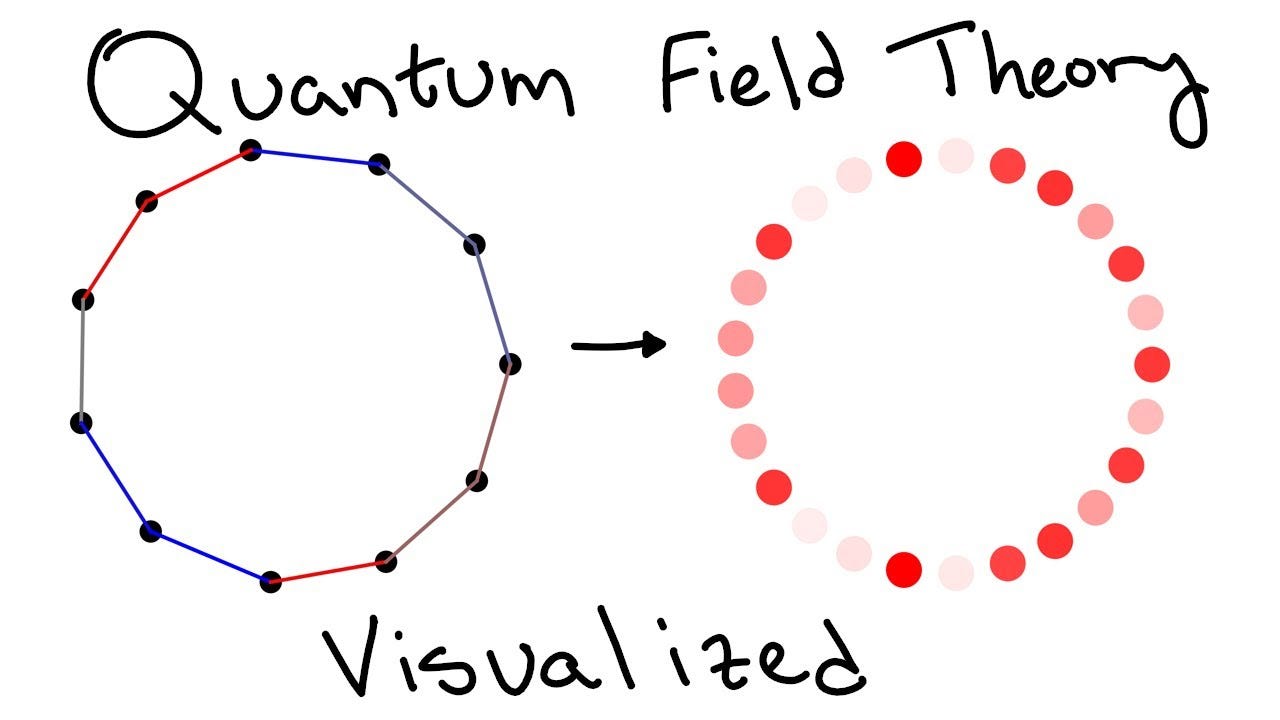
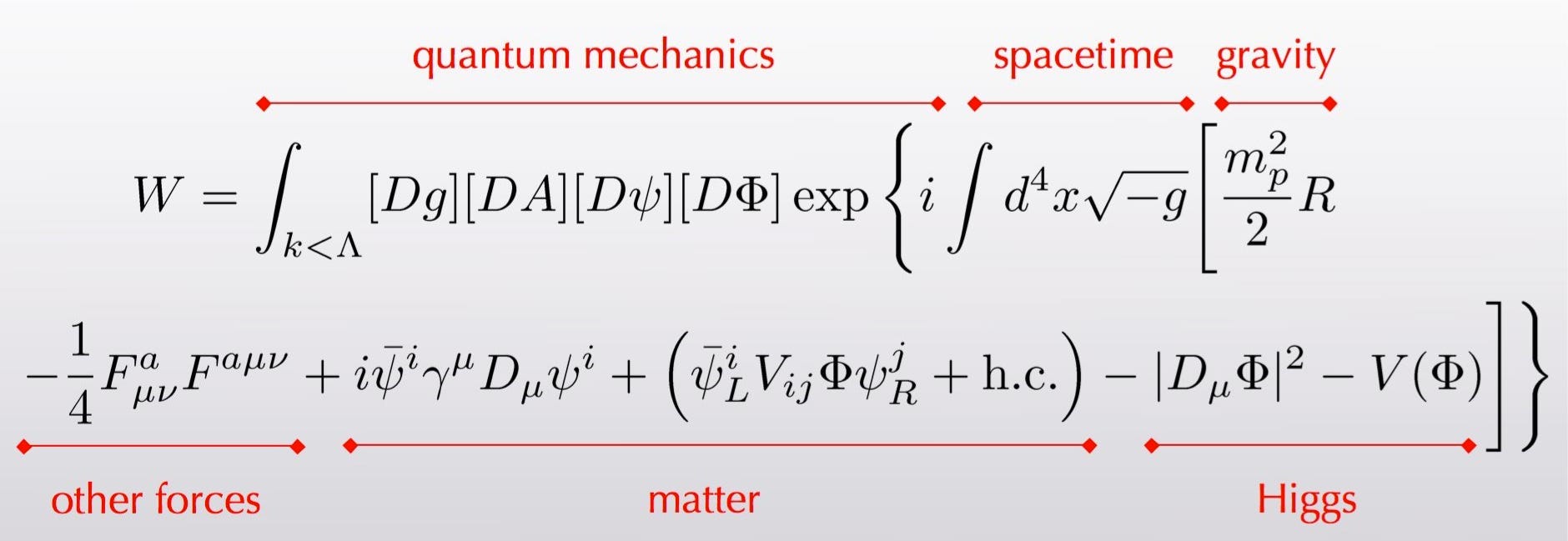
At its core, quantum mechanics revolutionized our understanding of reality by showing that matter isn’t solid or fixed but rather a manifestation of energy in constant motion. According to quantum field theory, the universe’s elementary entities are fields filling all space, with particles emerging as localized, resonant excitations—like vibrations in an infinite medium. Everything, from atoms to stars, vibrates at specific frequencies, and these vibrations determine form and properties.
Consider the famous equation from Einstein: E = mc², where energy (E) equals mass (m) times the speed of light squared (c²).
This implies matter and energy are interchangeable—matter is essentially “frozen” energy. Quantum physics extends this with wave-particle duality: particles like electrons behave as both localized matter and spread-out waves, oscillating at frequencies tied to their energy via Planck’s relation E = hν (h is Planck’s constant, ν is frequency). Atoms aren’t rigid balls but probabilistic clouds of vibrating energy, with no clear boundaries—merging the classical “solid” world with a fluid, interchangeable one.
From multiple angles, this interchangeability is profound. Evolutionarily, it echoes how life adapts through genetic rearrangements, but quantumly, it suggests all matter shares a common “substrate.”
Shapeshifting as Matter Rearrangement: From Vibrations to Transformation
If matter is vibrating energy, shapeshifting becomes a matter of rearranging these vibrations. Cymatics—the study of how sound frequencies create patterns in matter—illustrates this: low frequencies form simple shapes in sand or water, while higher ones yield complex geometries. 34 Scale this up: quantum strings in string theory vibrate at different modes to produce various particles, suggesting frequency alterations could “reprogram” matter.
In quantum terms, superposition allows particles to exist in multiple states until “collapsed” by interaction, hinting at potential rearrangements. 8 We are all interchangeable matter because, at the subatomic level, protons, neutrons, and electrons are identical across the universe—only their arrangements and vibrational states differ. Changing frequency could theoretically transmute elements (e.g., lead to gold via nuclear reactions), a form of atomic shapeshifting.
Contextually, this aligns with paradigm shifts in physics, from classical determinism to quantum probabilism. 0 9 Implications include advanced technologies like quantum computing, where qubit states “shift” via frequency manipulation. Extreme conditions (black holes, early universe) naturally rearrange matter, but humans can’t control those yet. (Lol)
Biological Shapeshifting in Nature: Octopuses and Lizards as Living Examples
Nature provides tangible examples of shapeshifting through biological mechanisms that echo quantum principles—rapid rearrangements of matter for camouflage and survival. Octopuses, dubbed “masters of disguise,” change color, texture, and shape in milliseconds using chromatophores (pigment sacs), iridophores (reflective cells), and papillae (muscle-controlled bumps). This isn’t magic but neural control over cellular vibrations—light waves interacting with pigments to alter perception. Mimic octopuses even impersonate other species (e.g., lionfish) by reshaping bodies, blending quantum-like wave interactions with biology.
Lizards, particularly chameleons, shift colors via nanocrystals in skin layers that adjust to reflect different wavelengths. This serves communication, thermoregulation, and camouflage, not just blending but signaling intent. Other lizards (e.g., geckos) mimic leaves or bark, while some regenerate limbs—literal matter rearrangement.
From evolutionary angles, these adaptations arose via natural selection, but quantum biology suggests entanglement or coherence in cellular processes aids rapid changes.
Folklore Connections: Vampires and Werewolves Through a Quantum Lens
Folklore’s shapeshifters, like vampires and werewolves, can be reinterpreted as metaphors for quantum transformations. Werewolves, rooted in lycanthropy (a delusion or “curse” of becoming wolf-like), symbolize the beast within—perhaps vibrational shifts triggered by lunar cycles (tides as gravitational waves). In European myths, they intersect with witchcraft, where shapeshifting via pacts or pelts represents matter rearrangement. Vampires, often shapeshifting into bats or mist, tie to diseases like porphyria, but quantumly, their “undead” state evokes superposition—neither alive nor dead until observed.
Controlling Matter Equals Controlling Perception: The Observer Effect
Quantum mechanics reveals that observation shapes reality—the observer effect, where measuring a system alters it. In the double-slit experiment, electrons act as waves (interference) when unobserved but particles when measured, collapsing superposition. This implies perception (via interaction) rearranges matter’s state.
Controlling matter thus controls perception: By tuning frequencies or observing selectively, one could “shift” forms or realities. Philosophically, this ties to observer theory, where consciousness constructs experience from the “ruliad” (all possible computations).
Demystifying Shapeshifting: Less Magic, More Science
Ultimately, shapeshifting is less magical than perceived—it’s the interchanging of vibrating matter via frequency shifts and rearrangements. Nanotechnology or quantum tech could enable “shapeshifting” materials, revolutionizing medicine and exploration. In exploring from quantum basics to folklore, we see shapeshifting as a bridge between myth and physics—a reminder that our universe is fluid, interconnected, and full of potential transformations.